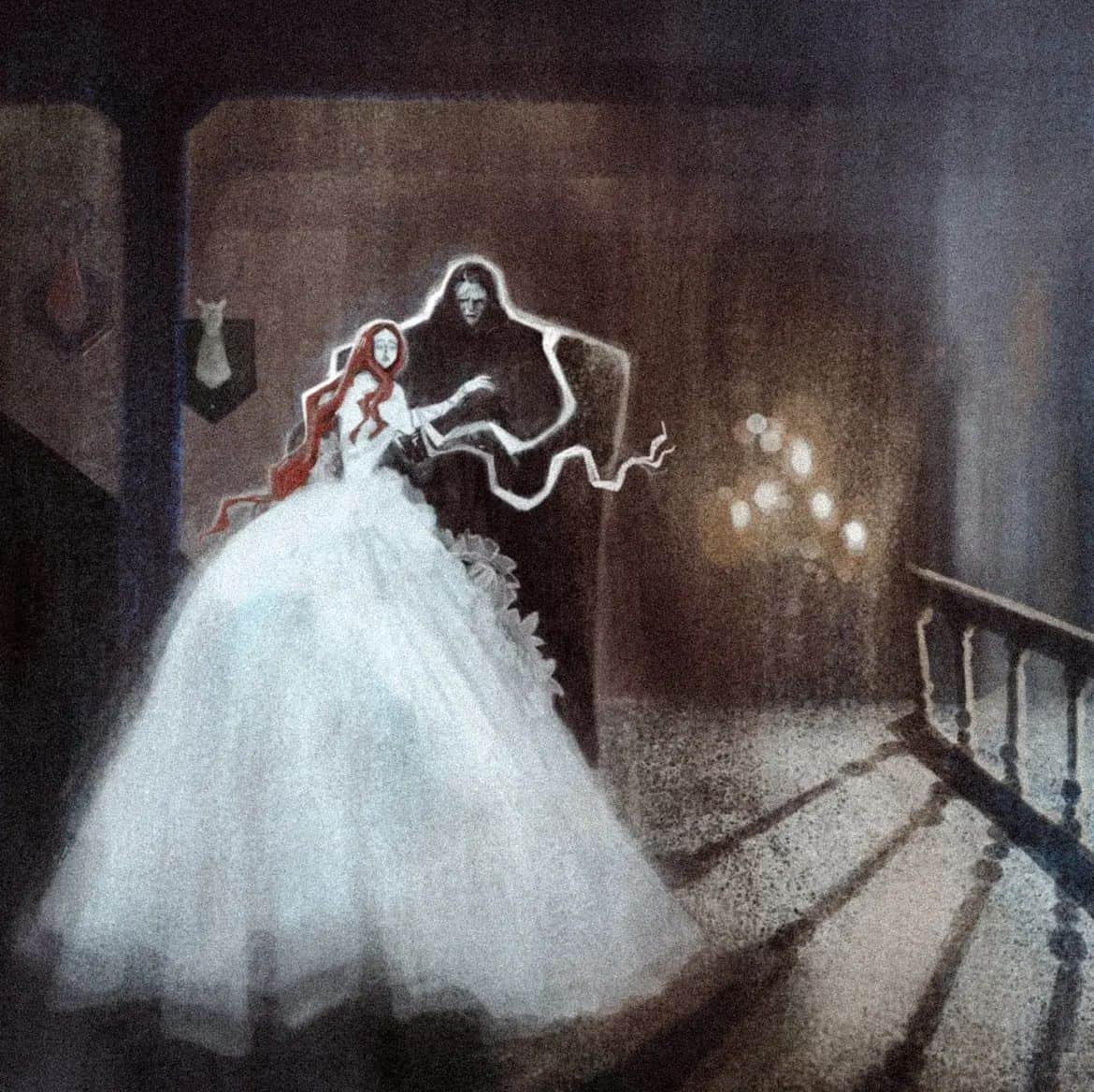
Guillermo del Toro comes back to the big and small screens in his partnership with Netflix alongside the imponent title of Frankenstein, an adaptation of the classical gothic novel written by English author Mary Shelly in 1818. The film is one of the director’s most personal and desired projects, holding a world premiere at the Venice Film Festival in August with a later brief showing in theaters, followed by a release on the streaming site of Netflix on November 7.
The cast features a star-studded cast, beginning with Oscar Isaac starring as one of the main characters, taking the role of Victor Frankenstein, the father figure of his divine creation, more known as the monster, Frankenstein, taking shape at the hands of Jacob Elordi. The supporting cast is just as powerful, we can find Christoph Waltz in his second big role of the year after appearing in Luc Besson’s Dracula; Charles Dance as Victor’s father and last but not least, Mia Goth, as the fiancée of Victor’s young brother.
The story is divided by chapters and it begins with Victor’s traumatic childhood and how his past and most of all, his father, impacted his current personality and desires. In his obsession to upstage his father and create the impossible, Victor sets himself into the quest of creating life, a creature formed out of dead body’s pieces. The endeavor finds the support of Henrich Harlander, Elizabeth Lavenza’s (Mia Goth) rich uncle who finances the experiment. Finally the main drama unfolds after the success of Victor, where the film divides itself in two perspectives, the creator and the creature, and it is at the hands of the audience to decide which one is the real story.
The production of the film took an exemplary work of the Art department, the Special effects team, and the Hair & Makeup department. Jacob Elordi underwent approximately 500 hours of make-up preparation throughout the whole production to portray the image of Frankenstein thanks to the known FX prosthesis artist Mike Hill. For the creature, 54 silicon pieces were applied, where 42 covered his entire body. Hill declared in an interview with Variety the desire of the director to put aside the cliché idea of “monstrous cadaver” or “zombie” for Frankenstein. He wanted to transmit the humanity of the creature, and for that reason they left Elordi’s eyes intact, a big communication element according to Guillermo.
The sets of the movie were also constructed from 0 since the director wanted the environment of the film to be real and genuine. He also stated he didn’t want to use CGI or AI in his productions, at least as little as possible. With that idea in mind he included massive sets such as Victor’s laboratory with all the machines and the arctic exploration ship. Del Toro has been an outspoken activist against AI in movie productions, expressing “Fuc- AI !” in his last showing of Frankenstein at the Paris theater in New York.
The plot of the film, even though it follows the main structure of Shelly’s novel, shapes its own form through Del Toro’s eyes. The director had been awaiting for over 20 years to produce and direct the film since he had a specific vision for the script. The movie talks about fatherhood, the underlying of it carries deep emotional charge in a circle of trauma from father to son ad infinitum. In the beginning, with Victor suffering at the hands of his father, fearing him and carrying his ghost until adulthood, wanting to surpass him yet later falling into his darkness and becoming who he hated the most when his newborn son, his creation, became alive.
Del Toro and the figure of fatherhood might evoke personal projections onto the script. His father was kidnapped in 1997 in Guadalajara, Mexico and after that, his relationship with Guillermo was never the same. The director declared that in the beginning, his father didn’t say anything about the incident, until one day both of them decided to sit down and talk about it all. From there he took the inspiration to explore the subjects of forgiving and liberation of guilt. Something he and his father, until his passing, talked a lot about.
Who is the monster? The film poses the question and points fingers in the search for a deeper perspective. Frankenstein explores guilt and forgiveness, the humanity of it all and undoubtedly a must watch.