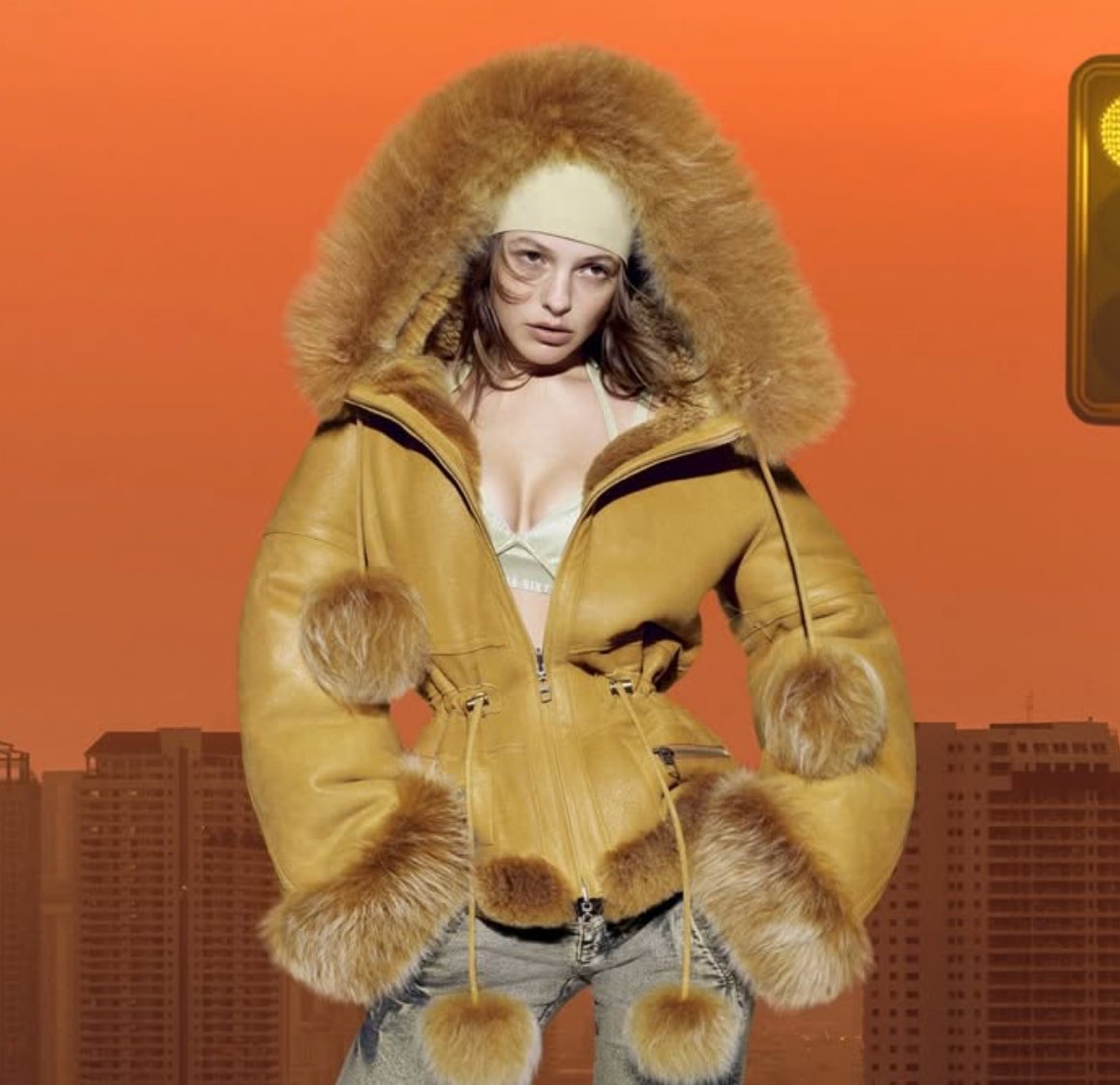
The new collaboration between KNWLS and Miss Sixty is not merely a capsule—it’s an emotional return to the primal atmosphere of the early millennium. It feels like rediscovering a memory: too recent to be archival, too distant to be trivial, and yet completely magnetic when reimagined through today’s aesthetics. It’s not about Y2K as a costume; it’s about living again with the reckless confidence of the era: low-rise as a form of protest, denim as a second skin, sensuality as its own dialect.
Miss Sixty once ruled the pop-glam streetwear of the 2000s. It was the brand of iconic mini skirts, dangerously low jeans, belts worn like declarations, and club corners lit by disposable flash cameras. It was fashion that never asked permission and had no need to justify itself. It was instinct in its purest form. Today, that instinct finds a catalyst in KNWLS—the London brand that has resurrected a hunger for clothes that both embrace and attack, that protect through exposure, that celebrate the body instead of disciplining it.
The collaboration doesn’t mimic; it reinterprets. It doesn’t “revive” Y2K; it rewrites it. KNWLS approaches the millennium not as an archive but as a tactile vibration, a feral energy that must be translated for Gen Z sensibilities. The garments don’t simply echo silhouettes of the era—they refine them through emotional engineering. Denim dresses hold the body like seatbelts. Fitted jackets sculpt the torso. Low-rise jeans transform the waist from liability into proclamation. Alongside them, the non-negotiable micro-skirt, graphic knit twinsets, and relaxed leather bags complete the arsenal. Every piece inhabits the space between seductive and dangerous, like walking at night with gasoline in the bloodstream.
Alana Champion is the chosen face of the campaign. She embodies the signature Gen Z paradox: digital awareness with a visceral craving for authenticity. Marili Andre’s photography places her in unreal landscapes that aren’t meant to be believable, only symbolic. Screensaver cities. Desert-like horizons. Vapor-glazed skies. It’s 2004 Photoshop aesthetics rendered into visual poetry.
But the most compelling element is how the campaign wields nostalgia as a weapon. Here, Y2K isn’t the kitsch fantasy of influencers chasing “likes.” It is a reminder that youth is rebellious, that daring is an act of resistance, that bodies don’t need perfection to be powerful. KNWLS and Miss Sixty don’t sell history—they sell attitude. The same attitude that made Miss Sixty an empire of desire when MySpace ruled the planet.
This collaboration does not plead for acceptance. It does not apologize for excess. It breathes as if minimalism never happened. And in that beautiful arrogance lies its thesis: fashion doesn’t exist to save the world—sometimes its role is simply to set it ablaze.
Credit: knwlslondon