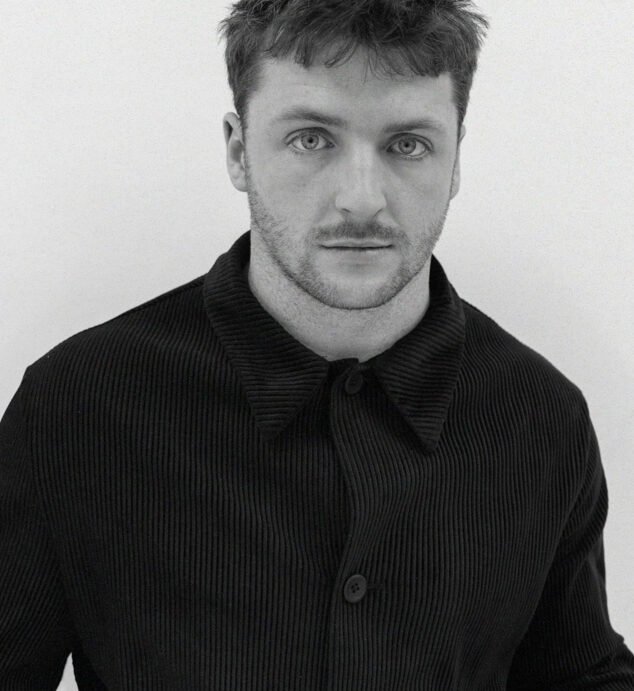
Who is Victor Miklos in essence? Where do you come from, and where are you heading?
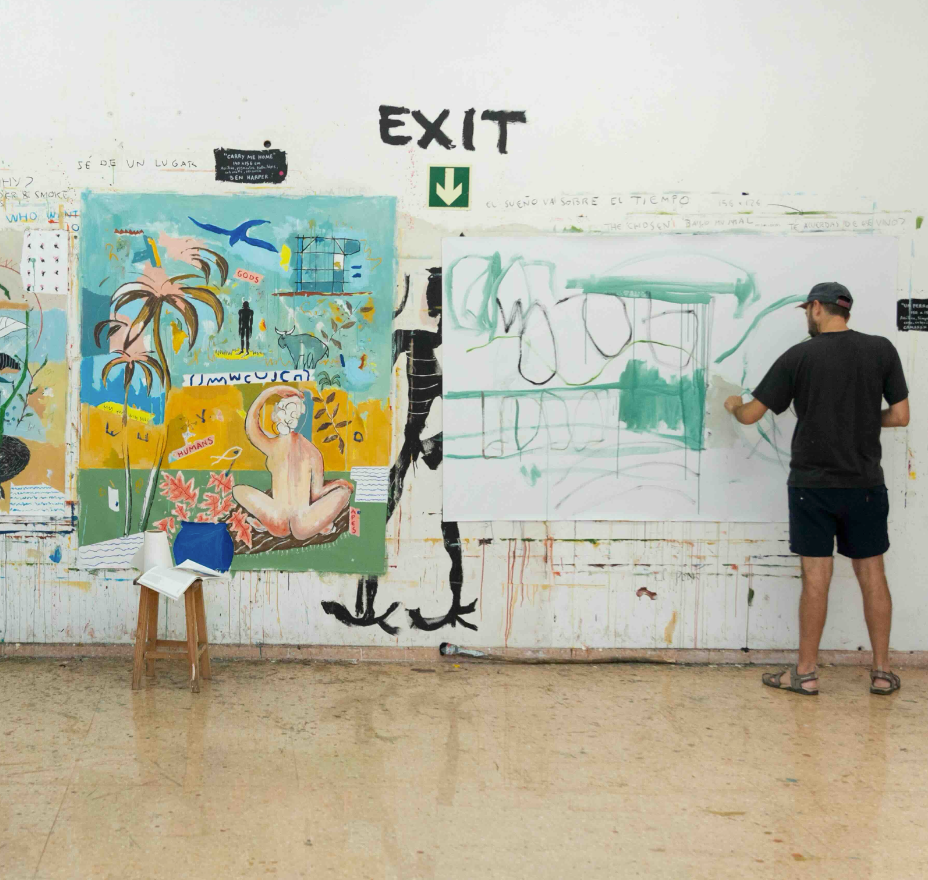
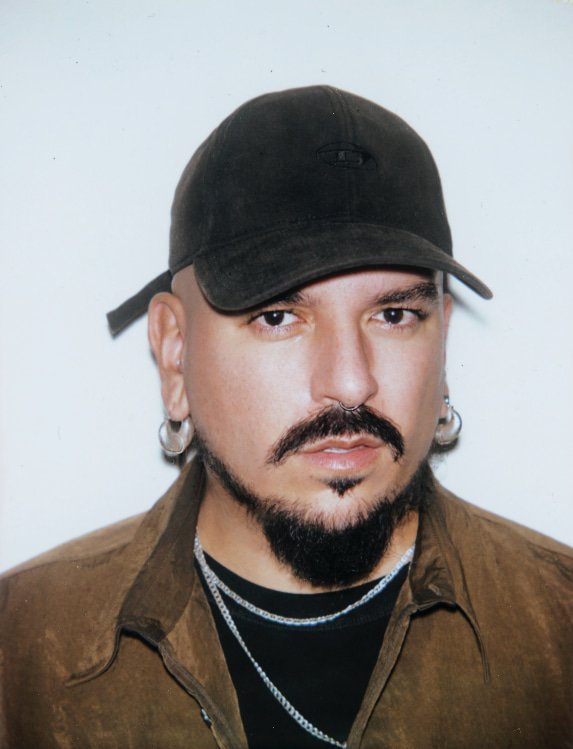
I’m someone who thinks through making. Currently 33 years old, from a farmhouse, a forest, the ocean, relatively quiet, grounded, and pragmatic, but I have lived in Eindhoven, Paris, Copenhagen, Chicago, South Alabama, Venice, and now going to Shanghai for a while, and I think that contrast has shaped me a lot. I’ve always been drawn to complexity, to things that don’t quite settle. Where I’m heading isn’t a destination in the traditional sense; it’s more about deepening a way of working, sharpening a language, and allowing my practice to remain open, porous, and responsive to the world around me. I’m really diving into craft and tradition these days. After working with craftsmen in Southern China this winter/spring, I will travel to Lebanon to create with craftsmen there, constantly moving both physically and mentally. For now, I’m moving.
There is a sense of chaos and vivid color in your work. How do your hands translate what your mind envisions?
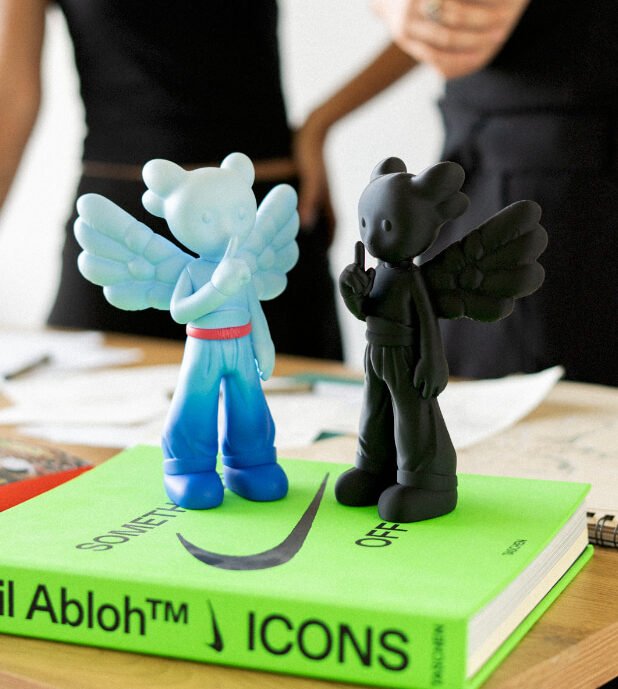
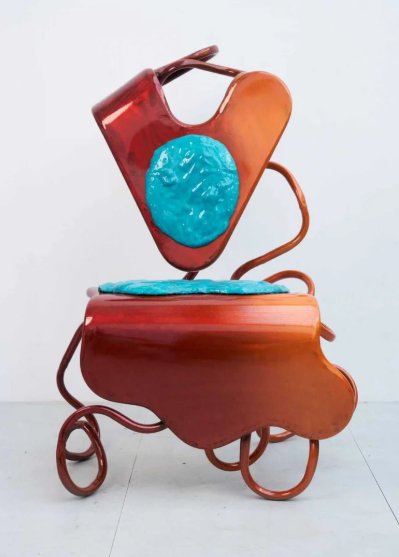
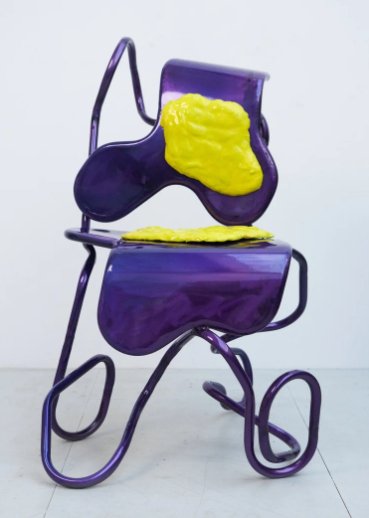
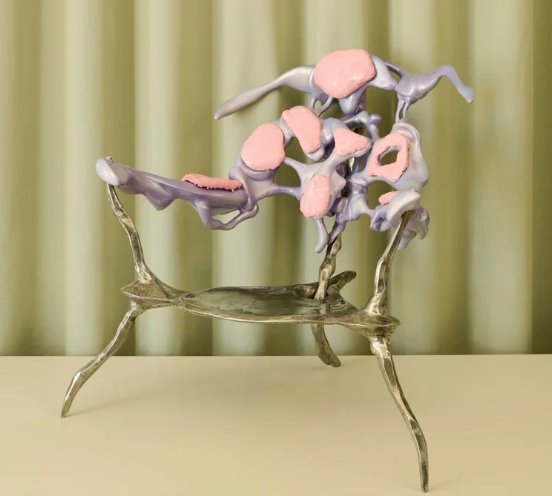
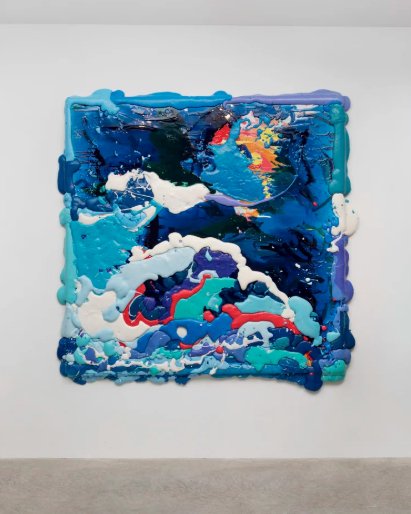
I actually don’t try to translate my thoughts directly. My mind is too chaotic for that. Instead, I let materials and process do part of the thinking for me. I work very physically and intuitively. Touching, cutting, welding, casting, assembling—and through that process, form starts to emerge. Color comes in almost like a pulse or a signal of life. It’s not decorative; it’s emotional and structural. The chaos you see is usually the result of negotiation, between control and letting go. It’s very relativistic, and I move a lot.

What do you think your work provokes in the viewer?
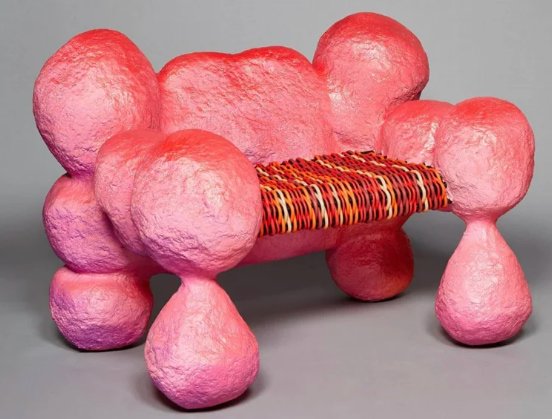
I hope it provokes curiosity before judgment. A pause. A moment where the viewer isn’t sure what they’re looking at or how to categorize it. People often say my work feels unexpected or strange in a familiar way. I like that tension between attraction and discomfort. If someone feels compelled to circle an object, to look twice, or to question its function or intention, then something is happening. I often invite performers and musicians to interpret the pieces, to live with them, like contact impro with the pieces, live shows at openings. I invite people to touch, sit, play—it’s okay, it’s just an object.
When did art enter your life in a tangible way?
Art didn’t arrive as a sudden revelation. Growing up in the middle of nowhere (by Danish standards), I built caves and imaginary universes in the forest and on the beach since I can remember. With only my brother around, it slowly infiltrated my life. I grew up around objects, furniture, design pieces—things with history and intention—and I learned early on that objects carry meaning. Making things with my hands felt natural, almost necessary. Over time, I realized that art was a way to build my own language, one that didn’t rely on explaining everything but allowed ambiguity to exist. It also helped that my parents are artists as well, I suppose 😉
What do you find in abstraction and color? Where do these impulses come from?
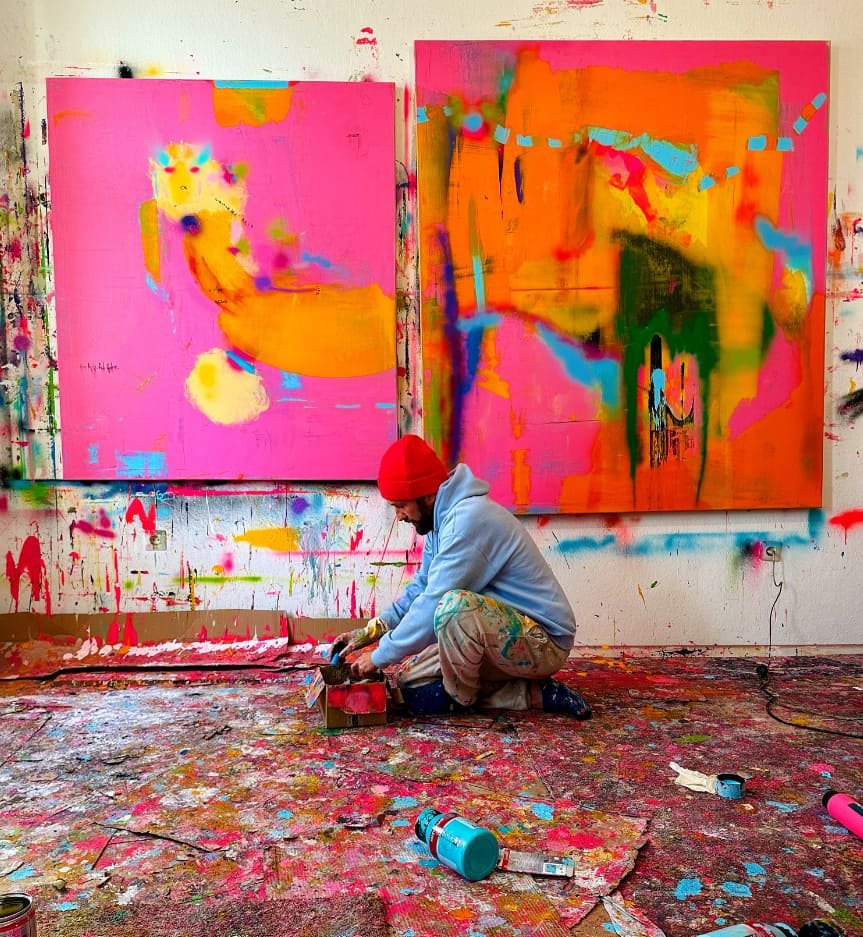
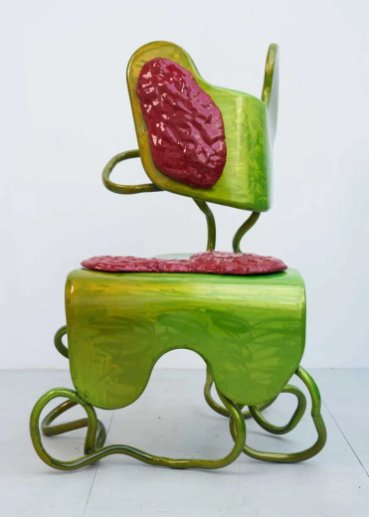
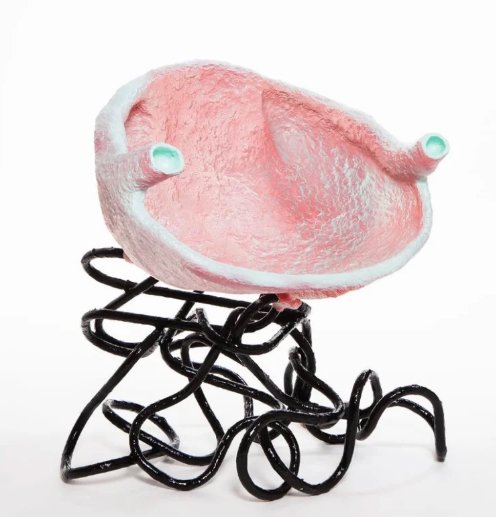
Abstraction opens a more natural narrative; functionality seduces and domesticates. It allows the work to speak on multiple levels at once—emotional, physical, conceptual. Color, for me, is instinctive. It comes from places, from industrial environments, from decay, from nature, from urban chaos. I don’t use color to beautify; I use it to complicate, to disturb expectations, to inject energy or tension into a form. I look at the pieces as an entity: how can I help you to exist, to feel natural, convincing? I build the frame, often of steel, and see it as bones. The mass—metal sheets, clay, plastic, fabrics, cardboard, etc.—I see as muscles. And I finish with the skin, the infusion of colour, very rarely as a closed “flat” surface, but as many transparent layers, like skin, like makeup. I have trained classical colour theory; I trust it’s there subconsciously. Itten and Goethe are not Wikipedia; it’s something you learn to see.
Is the person the same as the artist?
They overlap, but they’re not identical. The artist version of me is more extreme, more obsessive, more patient, more demanding. The person feeds the artist through lived experience—frustration, joy, travel, relationships, indulgement, suffering, etc. Sometimes the artist takes over completely; sometimes the person needs space. I think maintaining that tension is healthy.
How do you approach exhibitions and the business side of art?
It’s a necessary reality, but it can’t be the driving force. I try to work with people and institutions that understand the work beyond its surface. Visibility is important, yes, but not at the cost of integrity. In a world overloaded with images, clarity of intention and consistency of language matter more than noise, unfortunately. Beware of the post-Instagram syndrome.
How does an idea begin and end for you?
Ideas usually begin without words. They start as a fascination, a material curiosity, a question. I work until the object tells me it’s finished, when any further intervention would weaken it. That moment isn’t intellectual; it’s physical. You feel it in your body. Time is embedded in the object—all the hesitation, failure, reworking. That process is where the value lies.
Which materials are central to your practice?
I’m drawn to materials that resist me: aluminum, bronze, plastics, textiles, foam, industrial leftovers. I like combining things that shouldn’t coexist—soft with rigid, handmade with digital, refined with crude. Those clashes create friction, and friction is productive. I try to change people’s relationship to what is precious; my main argument is time, not material perception. To grind away at people’s understanding of marble, combine it with plastic, bronze with cardboard, etc. I’m allergic to aluminium, and I’m currently planning to build a cathedral of aluminium.
How do you deal with low inspiration or frustration?
I don’t fight it anymore, and I try not to drink too much. Periods of doubt or inactivity are part of the cycle. I step back, change environments, do something physical or repetitive. Inspiration returns when it’s ready. Disappearing for a while isn’t harmful, even though it’s daunting. But just start; it will come, and believe in it, talk with it. In the end, you are the only person who knows how the piece should be anyway.
Where do you seek peace?
The ocean, the forest. But I forget when I need it the most.
What balance allows you to live in harmony with your art?
Accepting uncertainty. Letting the work evolve without trying to control everything. Understanding that doubt doesn’t mean failure; it means you’re paying attention, that you care. Also, I don’t live in harmony at all. I’m like a parent: when the work is done, I tell it to move out, to go and live its life. I did what I could to mould it; now it’s not up to me anymore.
Something you cannot stand — and something you genuinely enjoy?
I can’t stand people who want to become artists and designers—in myself or in others. I do love people who dedicate their life to making art and design.