
Lykke Li unveils The Afterparty with an intense London performance
Lykke Li unveils The Afterparty with an intense London performance, marking a return that feels deliberate rather than reactive. In an industry driven by constant visibility, she moves differently. Instead of following momentum, she disrupts it. Therefore, her June headline show at KOKO reads less like a tour date and more like a re-entry point.

In this context, London becomes a meeting place. Past emotional structures collide with a newly distilled sound. As a result, the performance carries weight beyond the stage itself.
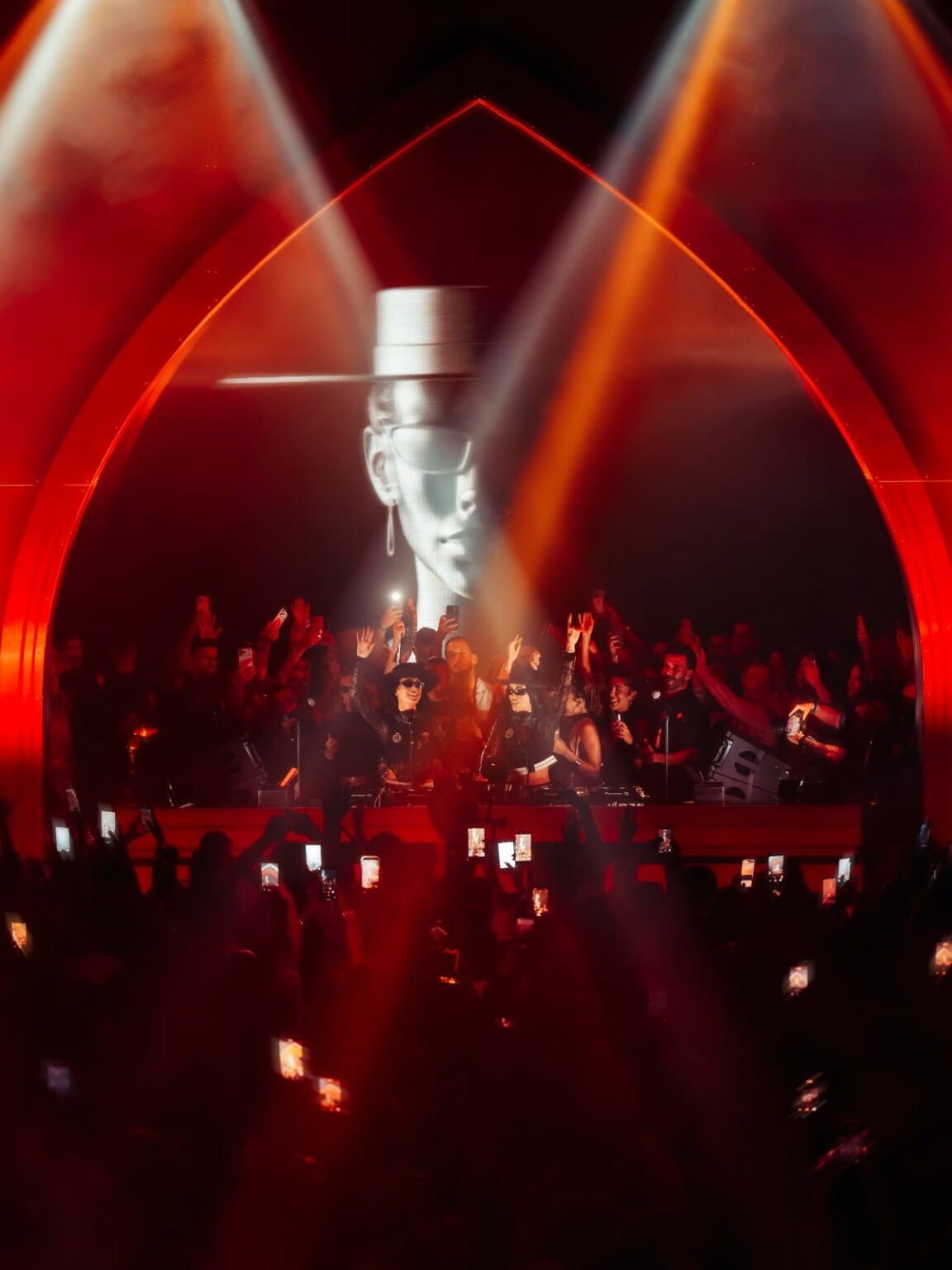
The announcement follows two Coachella appearances that felt unusually controlled. Rather than typical festival sets, they unfolded like staged hauntings. There, she introduced fragments of The Afterparty, her upcoming album releasing May 8. At just 24 minutes, the project resists excess. However, it still deepens her long-standing focus on emotional intensity.
Traditionally, pop builds toward climax. In contrast, The Afterparty focuses on what remains afterward. Executive produced with Björn Yttling, the album blends disco-lit strings with sparse arrangements. At the same time, flute details and what Li calls “apocalyptic bongos” create an unstable rhythm. Consequently, the sound feels suspended between control and collapse.
This tension is not new. In fact, it has shaped her work since Youth Novels (2008). Initially, her music felt fragile and diaristic. Over time, it became sharper. Albums like Wounded Rhymes and I Never Learn intensified her emotional language. Later, So Sad So Sexy introduced a more physical dimension. By the time EYEEYE arrived in 2022, she had fully embraced audiovisual storytelling.

Even so, The Afterparty is not an escalation. Instead, it is a recalibration. Recorded in Stockholm with a 17-piece orchestra, it favors precision over scale. The songs do not chase catharsis. Rather, they circle it. Themes of desire, shame, and exhaustion repeat with clarity. Importantly, that clarity feels uninvited, arriving only after excess.
Her latest single, “Sick of Love,” reflects this shift. Released shortly before Coachella, it carries a restrained defiance. On the surface, the melody feels simple. However, the emotional weight underneath is far more complex. Live, it reframed her past work instead of just introducing new material.
The London show at KOKO is her first in the city since 2022. At the same time, it sits within a wider European run. This includes appearances alongside Nick Cave, Robyn, and Wolf Alice. Because of this, her position becomes clear. She exists between experimental intensity and pop structure without fully belonging to either.
There is also intention in how she appears. She is not omnipresent. Instead, each moment is timed. Her tour path—from Los Angeles to Rio, São Paulo, Mexico City, Ireland, and across Europe—feels curated. Consequently, each city becomes part of the narrative rather than just a stop.
For London, intimacy plays a key role. KOKO, with its layered history and theatrical design, reflects her aesthetic. It is grand, but contained. As a result, the space invites confrontation. Not only with the artist, but with the emotional residue her music leaves behind.
If The Afterparty is, as she suggests, a “dance record for the end of the world,” then this performance becomes its live translation. Movement and meaning collapse into each other. Meanwhile, the boundary between artist and audience briefly disappears.
Tickets are expected to move quickly. However, the urgency here is not logistical. It is emotional. Lykke Li does not simply return to cities. Instead, she reshapes them, even if only for a moment.
In the end, what remains is not resolution. Rather, it is recognition.