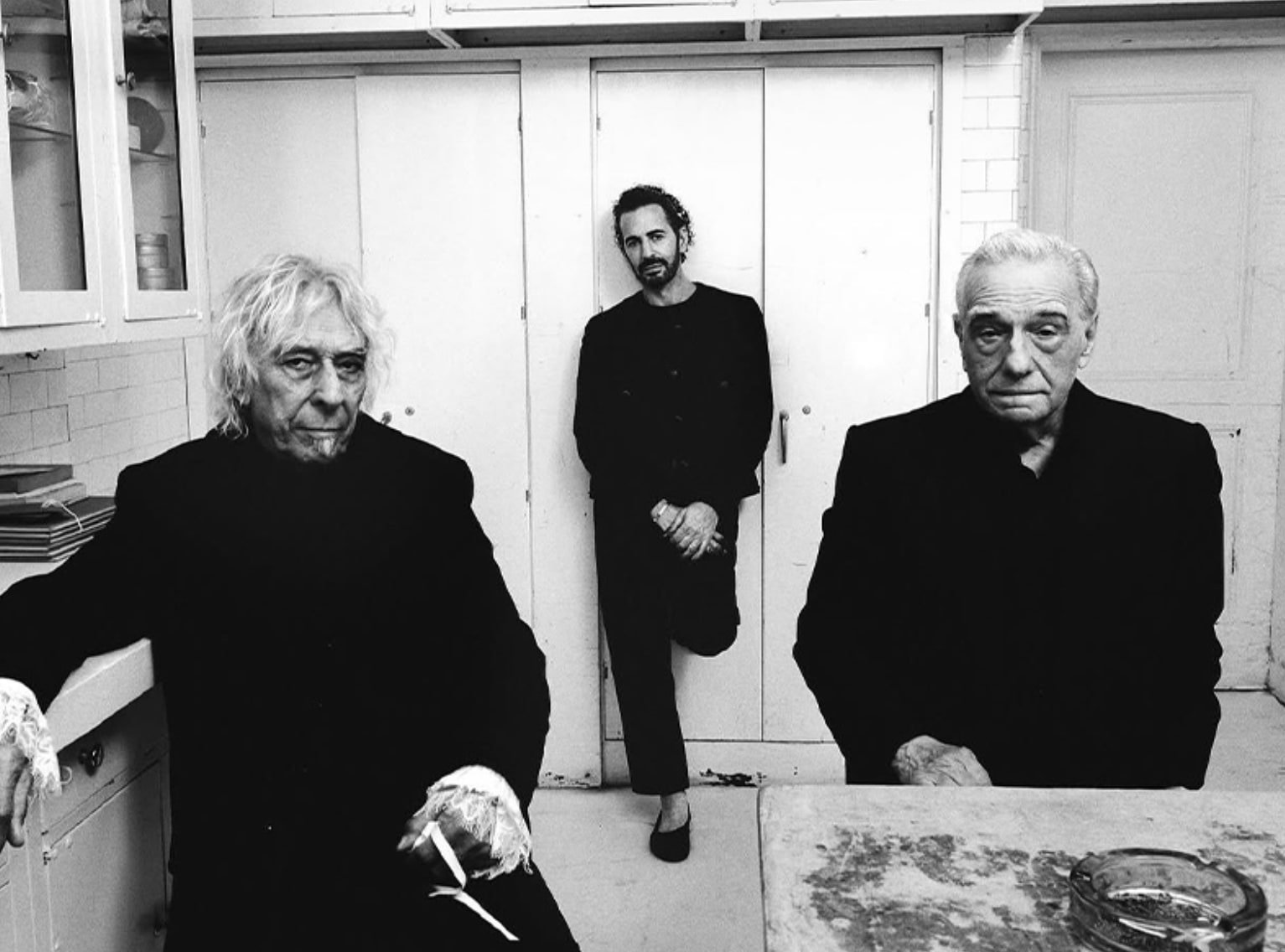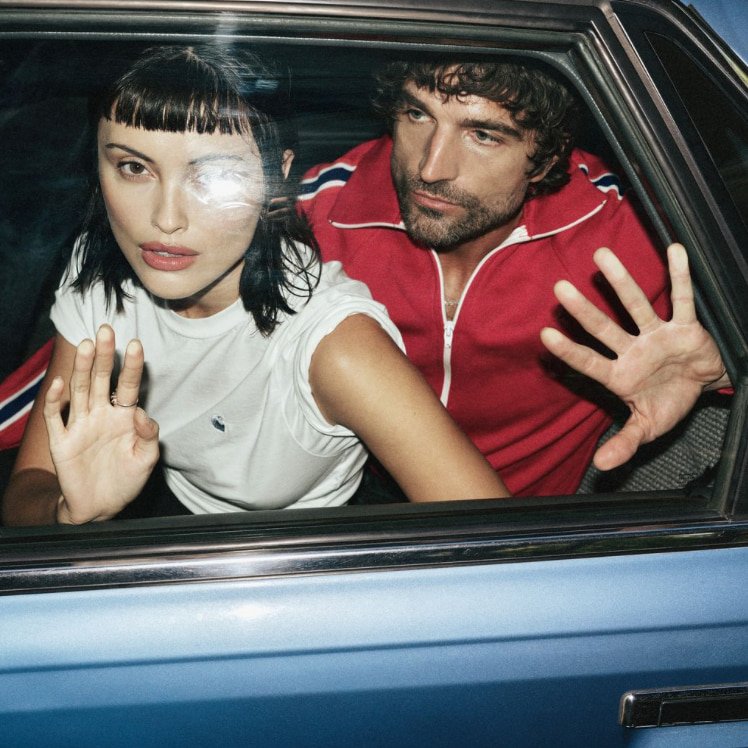
A. G. Cook doesn’t make music. He manufactures dimensions.
For him, pop isn’t a sound — it’s a simulation, a sandbox for human emotion wearing glitter-coded skin. His songs shimmer like broken mirrors: too bright, too perfect, too real to be fake.
Born Alexander Guy Cook in London, he grew up not chasing the mainstream, but decoding it. He looked at the pop song — verse, hook, chorus — and saw architecture. To him, Britney was Bauhaus, SOPHIE was sculpture, Auto-Tune was philosophy. By the time he founded PC Music in 2013, he had already weaponized the language of artificiality into something strangely spiritual.
PC Music wasn’t a label — it was a virus.
A glitter bomb dropped into the bloodstream of pop.
Each artist under its banner — Hannah Diamond, GFOTY, easyFun, Danny L Harle, SOPHIE — felt like a hologram that somehow bled. Their voices pitched beyond human, their visuals polished into the uncanny, their lyrics both parody and prayer. It was pop turned inside out, irony so intense it looped back into sincerity.
Cook’s manifesto was simple: the fake can feel realer than reality.
The world didn’t know what to do with him. Critics called it “post-internet pop,” “hyperpop,” “plastic emotion.” Cook called it honesty. “The computer doesn’t lie,” he once said. “It only reveals what you feed it.”
And that’s the secret: while the world debated authenticity, A. G. Cook coded it.
His collaborations with Charli XCX became the emotional core of 2010s alternative pop — raw, chaotic, glittering and self-aware. Together they built soundtracks for digital heartbreak, crafting mixtapes like Number 1 Angel, Pop 2 and how i’m feeling now. They made vulnerability hyperactive, turned breakups into browser tabs, and turned Charli’s voice into a digital weapon of tenderness. With SOPHIE, his late friend and creative twin, he found a mirror — someone who shared his belief that artifice could be revolutionary, that technology wasn’t the enemy of emotion but its amplifier.
Then came his own projects.
7G wasn’t an album; it was a system crash — forty-nine songs split into seven folders (piano, guitar, supersaw, spoken, drums, extreme, mix). It was as if someone had disassembled pop and spilled the parts on the floor. Some tracks sound like lullabies written by robots; others, like EDM hallucinations recorded inside a data cloud. It’s chaos disguised as clarity.
Apple, his follow-up, is almost romantic — if romance existed inside a processor. It’s glossy, vulnerable, full of yearning. “Beautiful Superstar” glows like nostalgia filtered through chrome. “Oh Yeah” sounds like falling in love with your reflection on a screen. Every melody aches with something digital yet devastatingly human.
But A. G. Cook isn’t just producing sound — he’s producing aesthetic consciousness. His visuals, typography, livestreams and collaborations blur the line between fashion, technology and music. Think latex meets latency. Couture made of code. He understands what few artists do: that style and sound are the same medium, just vibrating at different frequencies.
When he announced the end of PC Music as a label in 2023, it wasn’t a funeral — it was a reboot. The virus had already spread. Its DNA pulsed in the work of 100 Gecs, Dorian Electra, Caroline Polachek, even in the neon nostalgia of Gen Z fashion. Pop had mutated permanently. Cook didn’t kill the genre — he upgraded it.
He is, in essence, the Brian Eno of the algorithm age — a composer-philosopher who turned distortion into beauty.
His legacy? Teaching us that there’s no such thing as “too artificial,” only too afraid.
A. G. Cook didn’t make pop weird.
He made it honest — and honesty, in his universe, sounds like a machine learning how to cry.
Credit: @agcook404