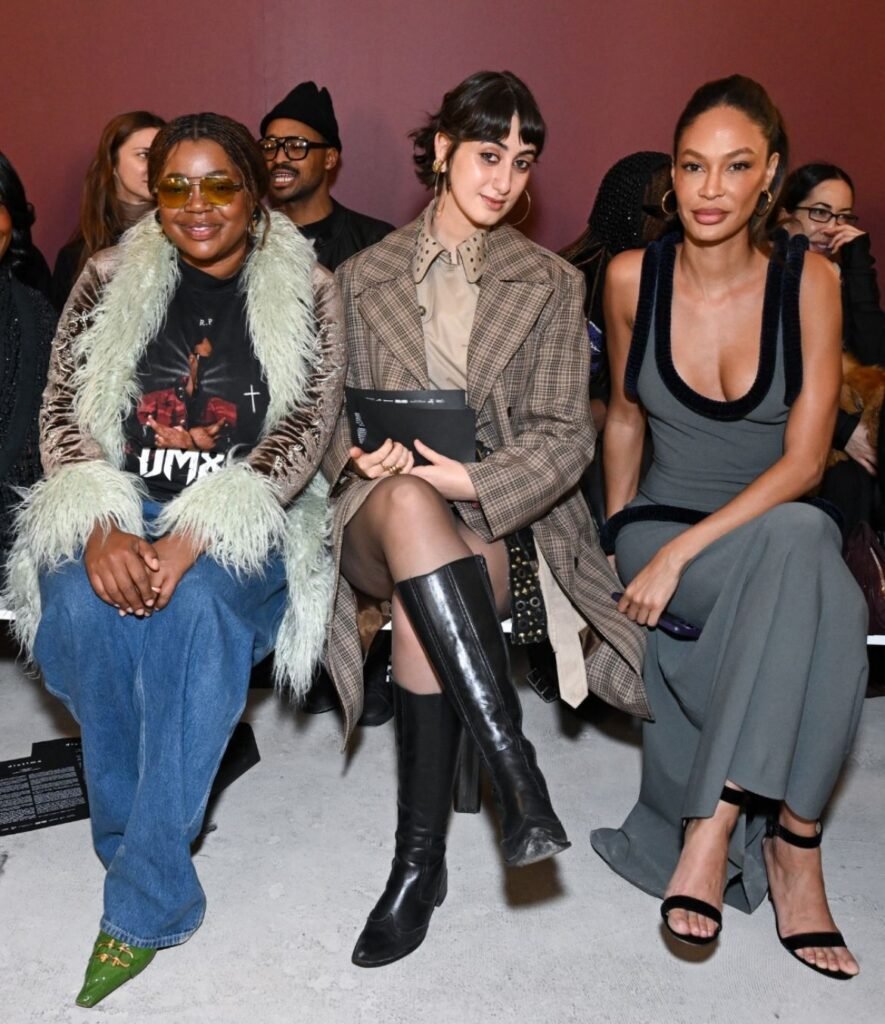
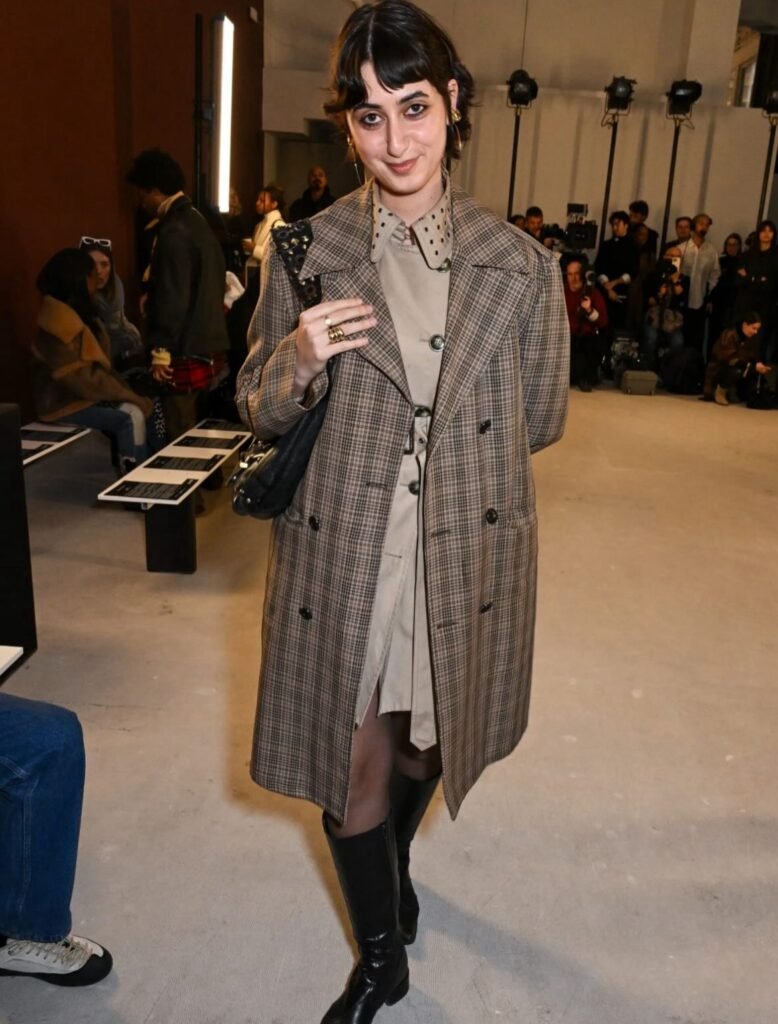
Near the close of New York Fashion Week, when the pace softens and the noise briefly thins, Rama Duwaji took her seat front row at Diotima’s Fall 2026 show. It was a deliberate choice, as always she leaves us with bold statements without uttering a single word.
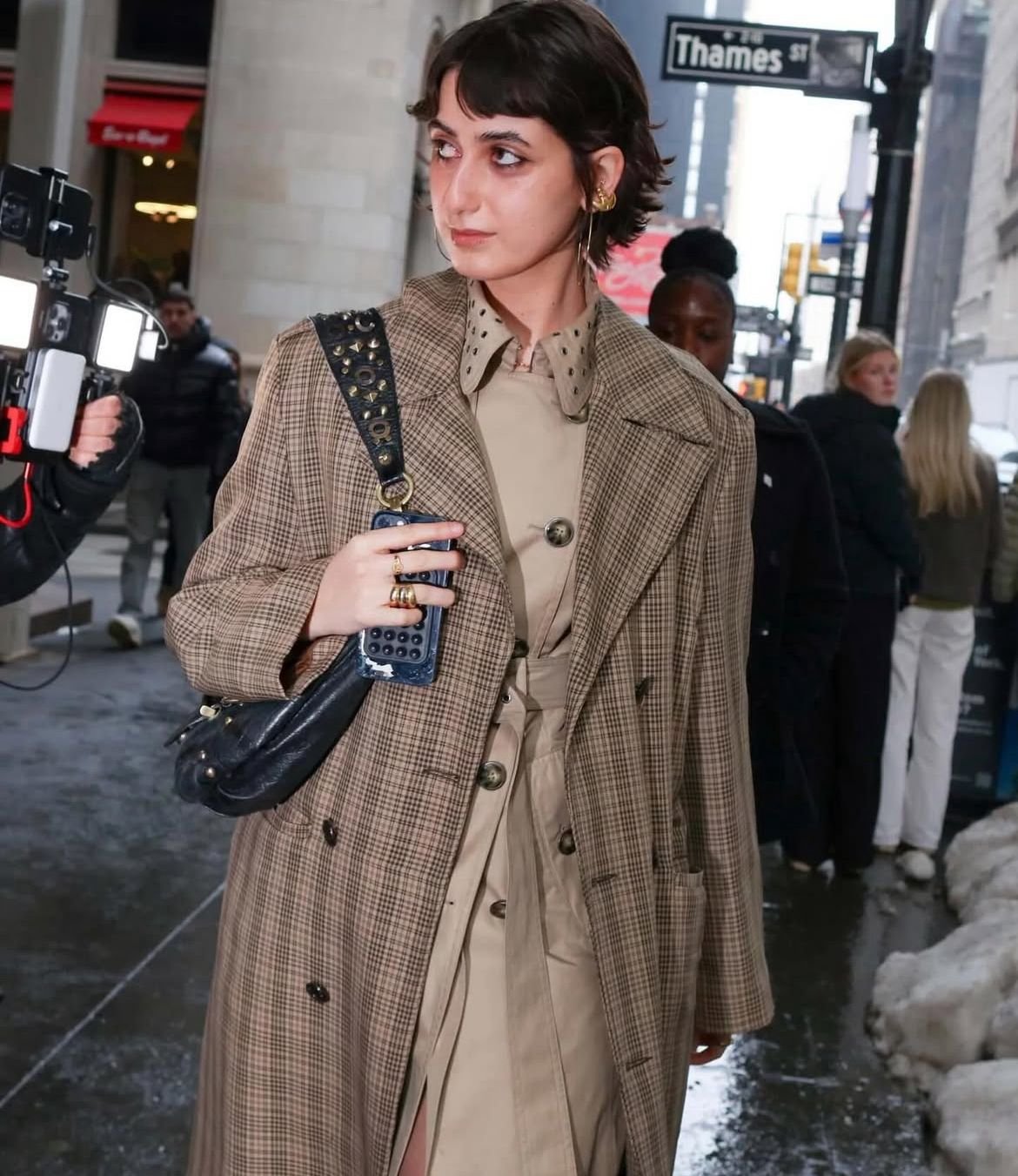
Duwaji wore a knee-length cream and brown check coat with generous lapels, layered over a polka-dot shirt with a rounded collar and a coordinating mini trench beneath. The look was finished with black knee-high leather boots and a grommet-studded handbag. Her hair, already recognizable as its own signature the cropped, tousled “Rama” cut with micro-bangs completed the image. It was refined, expressive, and unmistakably intentional.
At 28, Duwaji is the youngest first lady in New York’s history, but she arrives in the role with a fully formed creative identity. An artist and illustrator whose work has appeared in The New Yorker and The Washington Post, she has been vocal about resisting being framed solely as her husband Zohran Mamdani’s wife.
Fashion is expression and it says a lot of what we think and how we are. And definitely speaks of what we stand for, and Rama knows that very well. She faces now more than ever the contrasting problem of being in the spotlight. How can you be you but still present yourself in a diplomatic and amiable way? Duwaji has a strong personality as a young artist with an immigrant background but also as the first lady of one of the most important cities in the world. Is she ought to change ?
Since Mamdani’s inauguration, Duwaji’s wardrobe has been closely scrutinized. For intimate moments, she has favored designers like Renaissance Renaissance, founded by Cynthia Merhej, while public appearances have included vintage rentals from Albright Fashion Library and borrowed pieces from emerging brands. Sustainability, affordability, and visibility are always in tension.
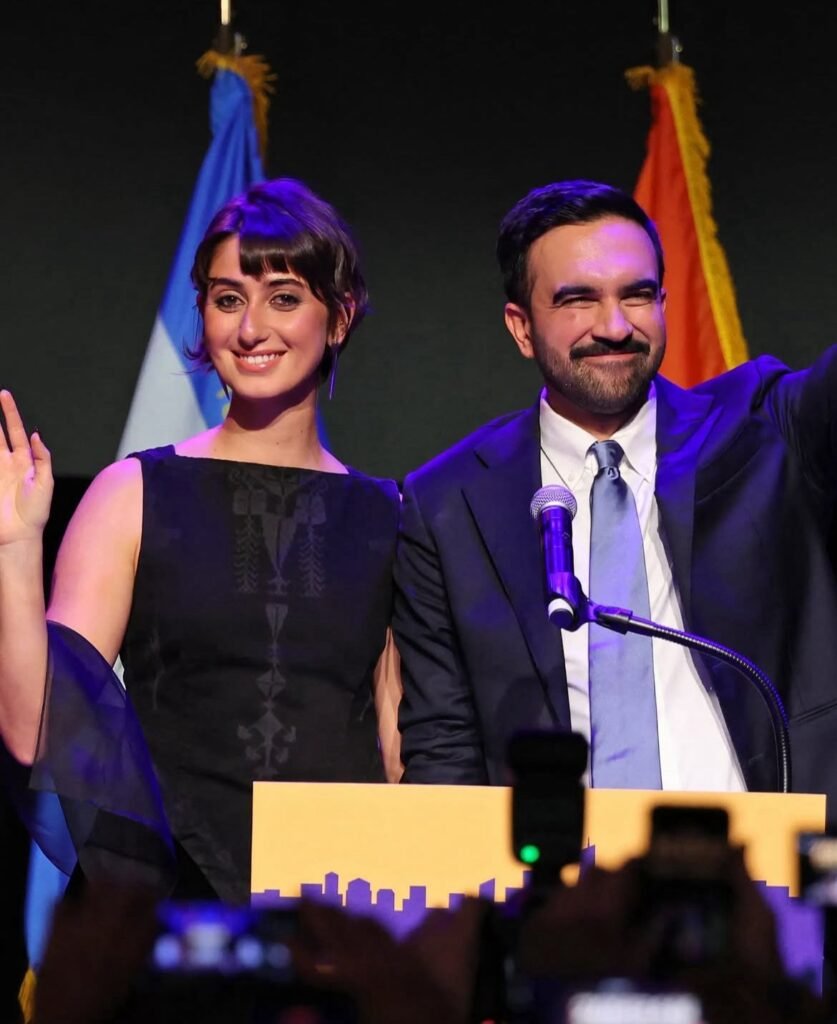
One of the most important fashion moments for her was her first public outing after the victory of Mamdani. Wearing a black sleveless top from the firm Zeid Hijazi. The piece was made from laser-engraved denim, an alternative that without a doubt is more enviromentally friendly to traditional washing techniques. Adding a special design on top: Palestinian traditional embroidery called «tatreez» a design that tells the story of the woman that carries it, her place of birth, marital status, between other things. Once again, Rama giving us a class-act.
Her collaboration with stylist Gabriella Karefa-Johnson, seated beside her at Diotima, underscores how curated her image truly is. Every coat, every boot, every borrowed garment carries meaning in a city where politics, celebrity, and fashion are inseparable.
In choosing Diotima over legacy luxury houses, Rama Duwaji offers a blueprint for modern political style: one that uplifts local talent, embraces complexity, and understands that in New York, what you wear is never just what you wear, it’s what you stand for.