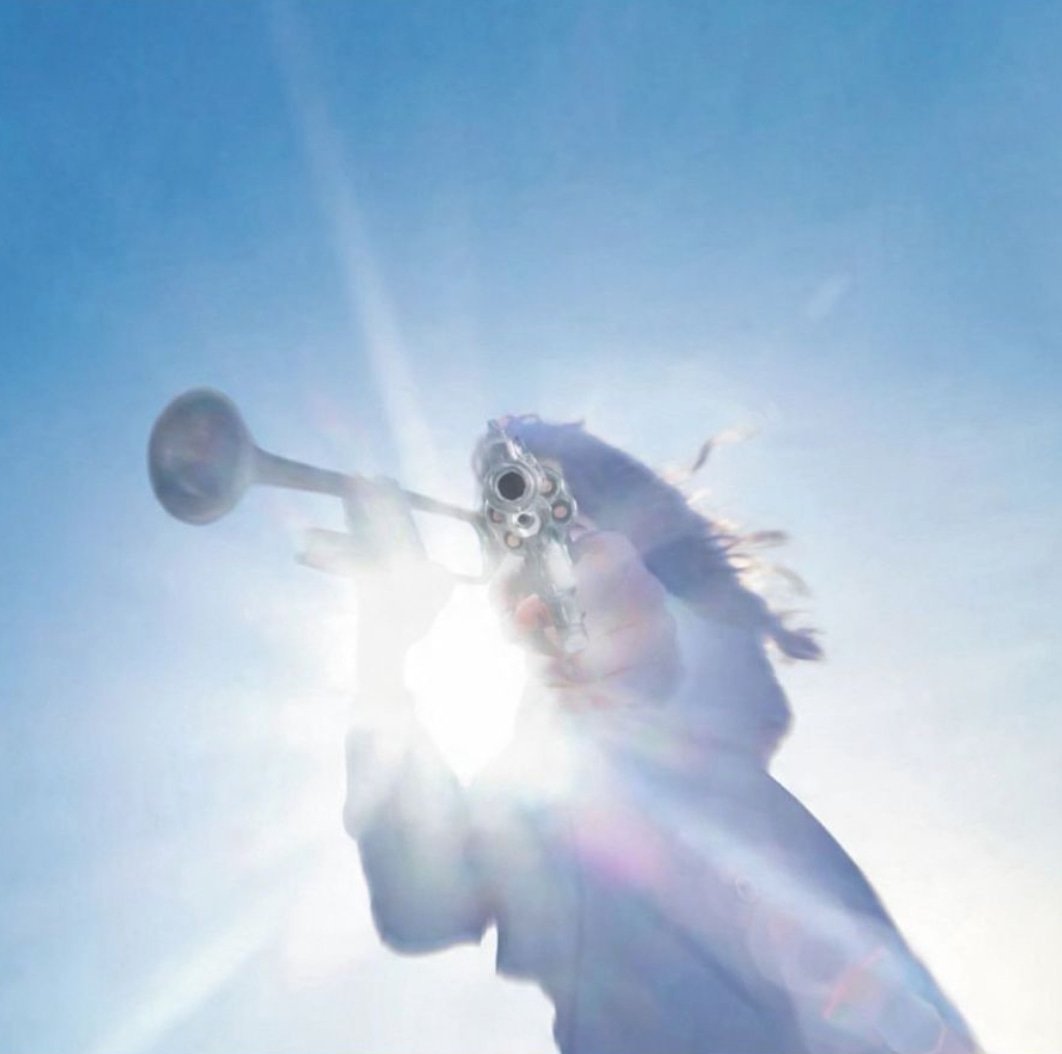
Somewhere between an empty highway, desert dust, and the silence of a lost house in Texas, Kacey Musgraves found the perfect space to start writing her story again.
That place has a name: Middle of Nowhere.
Her sixth studio album, arriving on May 1, 2026, is not simply a new chapter in Musgraves’ career. It feels more like a deliberate pause in the middle of the road — a place where there’s no rush to reach any destination and where the music is allowed to breathe with an almost radical calm.
The title doesn’t come from an elaborate metaphor. It comes from something much more literal: a small rusted sign in Golden, Texas, the tiny town where the artist grew up, with fewer than 300 residents and not even a traffic light. The sign reads: “Golden, TX: Somewhere in the Middle of Nowhere.”
A simple phrase. But also a powerful idea.
Because for Musgraves, the “middle of nowhere” isn’t an emptiness. It’s fertile territory — an emotional space where things haven’t yet taken their final shape.
The album’s first preview, Dry Spell, makes it clear from the very first second that this project has no intention of playing it safe. The song blends sharp irony with a kind of almost brazen clarity. It’s playful, self-aware, and musically precise — a small blaze of wit where each line seems to fold in on itself.
The music video — co-directed by Musgraves herself alongside Hannah Lux Davis — reinforces that sense of a self-contained universe: dry humor, clean aesthetics, and an artist who no longer needs to prove anything to anyone.

Much of that confidence comes from the creative process. Middle of Nowhere was produced by Musgraves together with her longtime collaborators Daniel Tashian and Ian Fitchuk, a trio that has spent years refining a musical language where country is never a rigid boundary, but rather a starting point.
The album breathes tradition, but not nostalgia. Pedal steel, accordions, and rhythms inspired by Texan dancehall appear as sonic pillars, yet they’re quickly reshaped by unexpected influences: bluegrass, pop, echoes of Norteño, and even touches of zydeco.
The result is a musical map where genres stop being labels and become landscapes.
The album also brings together collaborations that reinforce its American roots: Willie Nelson, Miranda Lambert, Billy Strings, and Gregory Alan Isakov appear as fellow travelers across this open territory.
But the true heart of the project lies somewhere else.
After a romantic breakup, Musgraves went through one of the longest periods of solitude in her life. And against all expectations, she discovered something unexpected: solitude could be a comfortable place.
Instead of filling it with noise, she chose to live inside that silence.
The artist speaks about “liminal spaces”: moments of transition when we don’t yet know who we’ll become afterward — uncomfortable places we usually rush through in order to reach the next definition of ourselves.
Musgraves decided to stay there a little longer.
Between Texas, Tennessee, and Mexico — among horses, humor, writing, and old musical friends — she gradually found the tone of the album: an open, dusty sound that is surprisingly luminous.
If her previous album, Deeper Well, had already demonstrated her ability to reinvent herself — debuting at the top of the charts and strengthening her global presence — Middle of Nowhere seems to go one step further: less concerned with the industry, more guided by intuition.
And perhaps that’s the key.
Because in an era obsessed with getting everywhere quickly, Kacey Musgraves has decided to stop in the most unlikely place.
In the middle of nowhere.
And from there, begin again.