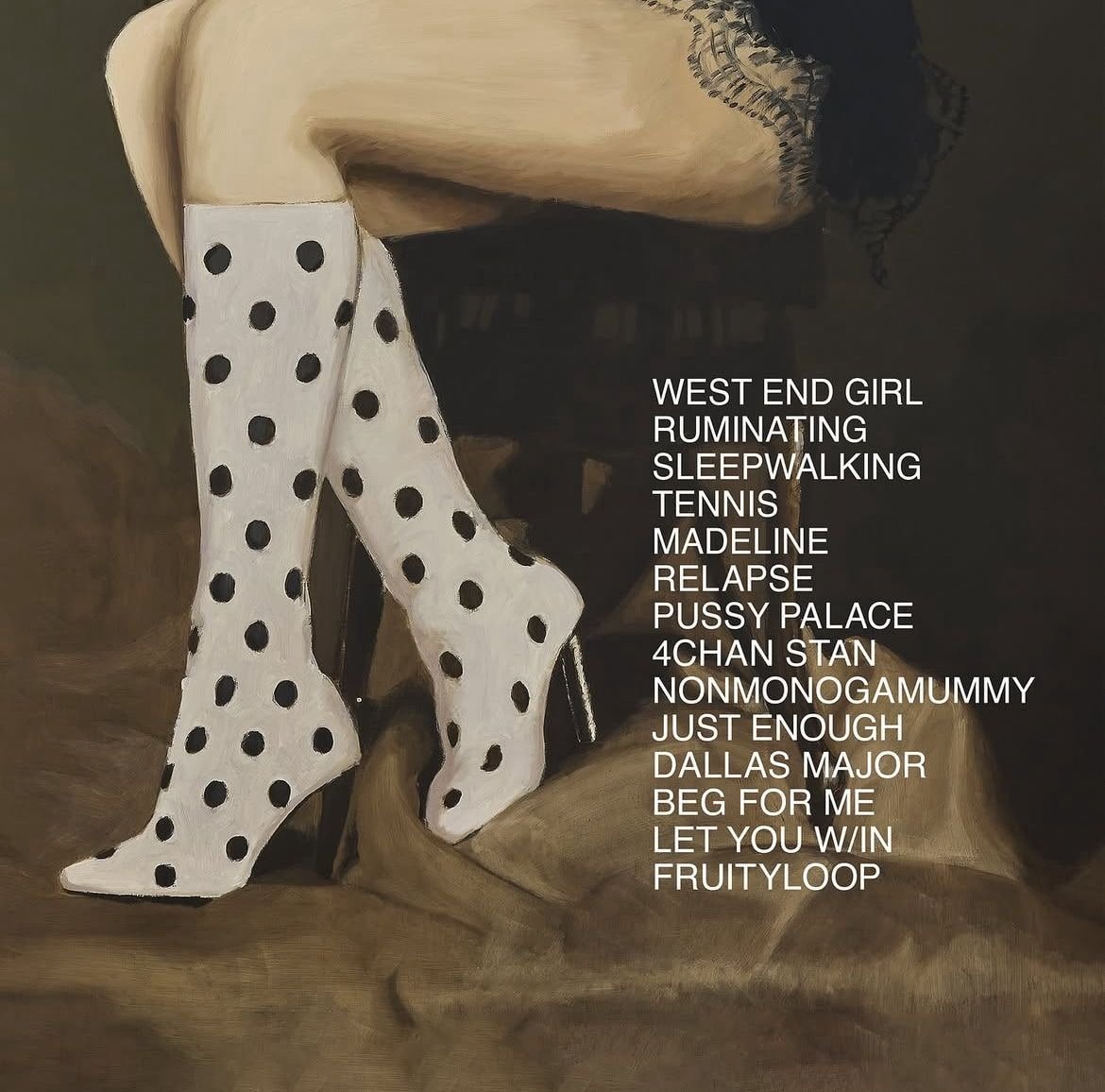
Lily Allen has never been afraid of telling the truth, but West End Girl is the moment she stops softening the blow. At 40—two divorces deep, mother of two teenage daughters, and absolutely done with decorum—Allen arrives with her fifth studio album, a body of work forged in one of the most painful chapters of her life. Yet, paradoxically, it’s also her most creatively electric. For an artist who has always mined her own experience, heartbreak remains her sharpest tool, and this time she wields it like a scalpel.
The public already knew her split from David Harbour was messy. What they didn’t know—until now—is just how deep the cuts ran. On West End Girl, Allen narrates the full unraveling of her marriage with graphic detail, zero euphemisms, and a fury sharpened into art. Critics have tossed around comparisons: Lemonade, Shakira’s Bzrp session, every so-called “revenge record.” But what Allen achieves here goes far beyond retaliation. This is documentation. Survival. A woman refusing to be gaslit by the polite silence fame demands.
Across 14 songs, arranged chronologically, she retraces the emotional topography of her breakup. The opening tracks root her in New York—a city she never wanted, a house she and Harbour couldn’t afford, a loneliness sharpened by the ocean between her and the London stage she was performing on. He didn’t mind the distance. That, she realizes, was the first crack.
Then comes the dripping dread: Ruminating, a sleepless spiral of half-formed suspicions; Sleepwalking, where the clues shift from metaphorical to literal; Tennis, the moment she finds the evidence; and Madeline, the fictional composite of the women who haunted her marriage. Their supposedly consensual non-monogamy had rules. He broke them all.
But it’s Pussy Palace—the album’s explosive centerpiece—that cements West End Girl as Allen’s most unfiltered work. She describes their home turned playground for his affairs with forensic precision: ripped sheets, stray hair, unopened cuffs, a shoebox of letters from women he’d also failed. The song is not vicious; it’s truthful, and the truth stings.
From there, the descent into hell becomes a climb back out. Tracks like Relapse, 4chan Stan and Nonmonogamummy reveal her shame, anger, and dyed-in-the-wool self-doubt. Just Enough hits hardest—her fear that he denied her the chance to have more children, possibly while giving that chance to someone else. By Dallas Major, she sings openly as a separated mother, exhausted by fame and failure. Beg for Me and Let You W/In crack open guilt and exhaustion before Fruityloop finally lets in light.
Because in the end, she remembers: It wasn’t me, it was you. And reclaiming that truth—loudly, lyrically, beautifully—is Allen’s ultimate victory.