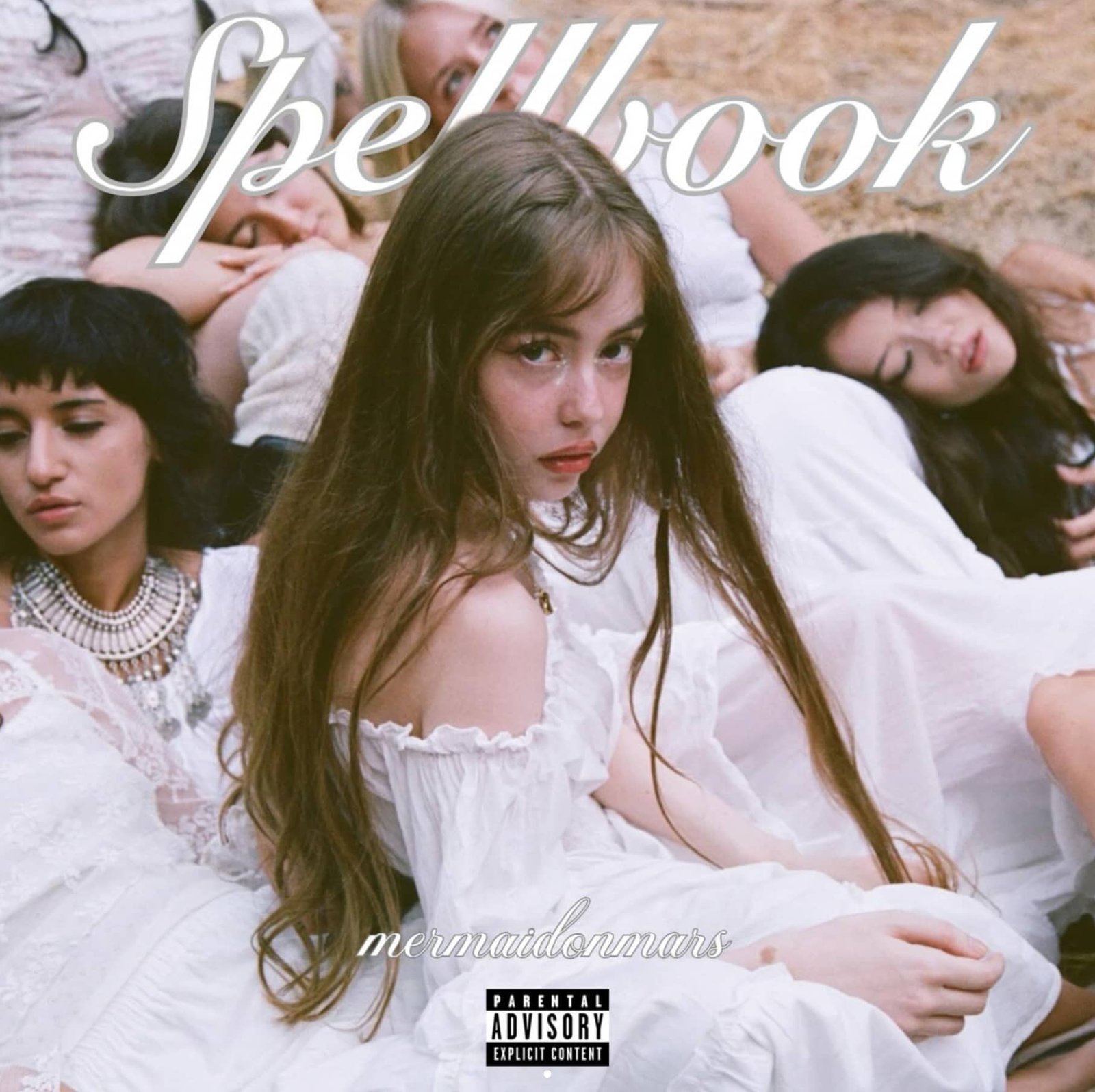
Mermaidonmars turns intimacy into method with Spellbook
At a cultural moment defined by overexposure, Spellbook arrives as a deliberately restrained gesture. mermaidonmars’ latest project does not compete for attention or attempt to dominate the constant flow of releases. Instead, it moves inward. The album is built around intimacy as a creative position—understood not as fragility, but as a form of control.
Rather than offering a clear narrative or unified message, Spellbook unfolds as a sequence of emotional fragments. Each track functions as a self-contained piece that, when taken together, forms a sensory map rather than a linear story. There is no attempt to explain or guide the listener. The record opens a space where sensation comes before conclusion.
The title defines the project with precision. Spellbook does not gesture toward mysticism as surface aesthetics, but toward the idea of private knowledge—something consulted quietly, not displayed. In this sense, the songs operate as personal formulas: tools for organizing internal states, not translating them into spectacle. The voice remains integrated within the soundscape rather than asserting dominance, reinforcing a sense of horizontal listening.
Sonically, the album avoids immediate impact. The production favors texture, space, and internal rhythm. Arrangements seem to breathe, allowing time to stretch and silence to carry weight. Nothing pushes toward a climax. Attention is sustained through accumulation rather than shock.
This positioning carries clear cultural weight. In an industry that demands clarity, speed, and constant presence, Spellbookembraces ambiguity and slowness. There is no obvious visibility strategy, no attempt to monetize vulnerability. Intimacy is not turned into content—it is kept intact.
That decision turns the album into more than a collection of songs. It functions as a quiet statement on how to create today without submitting to the logic of performance and productivity. mermaidonmars does not aim to lead a scene or define a trend. The work lives at the margins, where music can still exist without justifying its usefulness.
Spellbook offers no easy headlines or moments engineered for circulation. What it leaves instead is a lingering sensation—something that stays after listening, like an unspoken question or a recurring image. In an era of noise, that discreet permanence may be its strongest gesture.